I used Decopy AI Humanizer to rewrite AI-generated content, but I’m not sure the results sound natural or if it’s actually worth paying for. Some sections still feel robotic, and I need honest feedback before I keep using it for blog posts and website copy. If you’ve tried it, I’d really appreciate a real Decopy AI Humanizer review, including accuracy, readability, and whether it helps content pass AI detection tools.
Decopy AI Humanizer
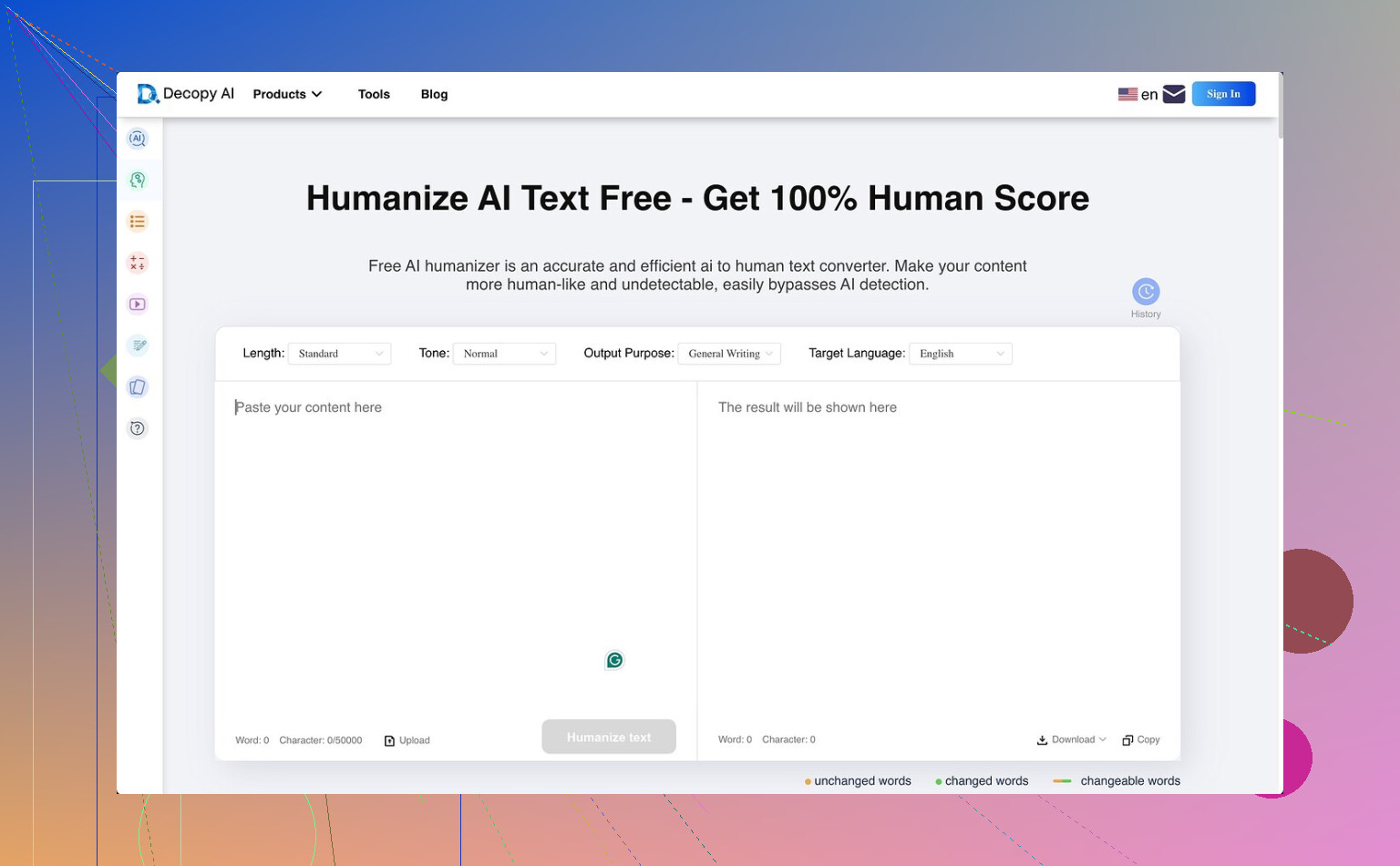
I tried Decopy AI Humanizer because the free tier looked kind of absurd at first glance, 500 free runs, 50,000 characters per pass, eight tone options, and nine use-case presets. On paper, it looks loaded. There is also a sentence-by-sentence redo tool, which I liked more than I expected. If one line comes out weird, you re-roll only tht part instead of burning the whole output.
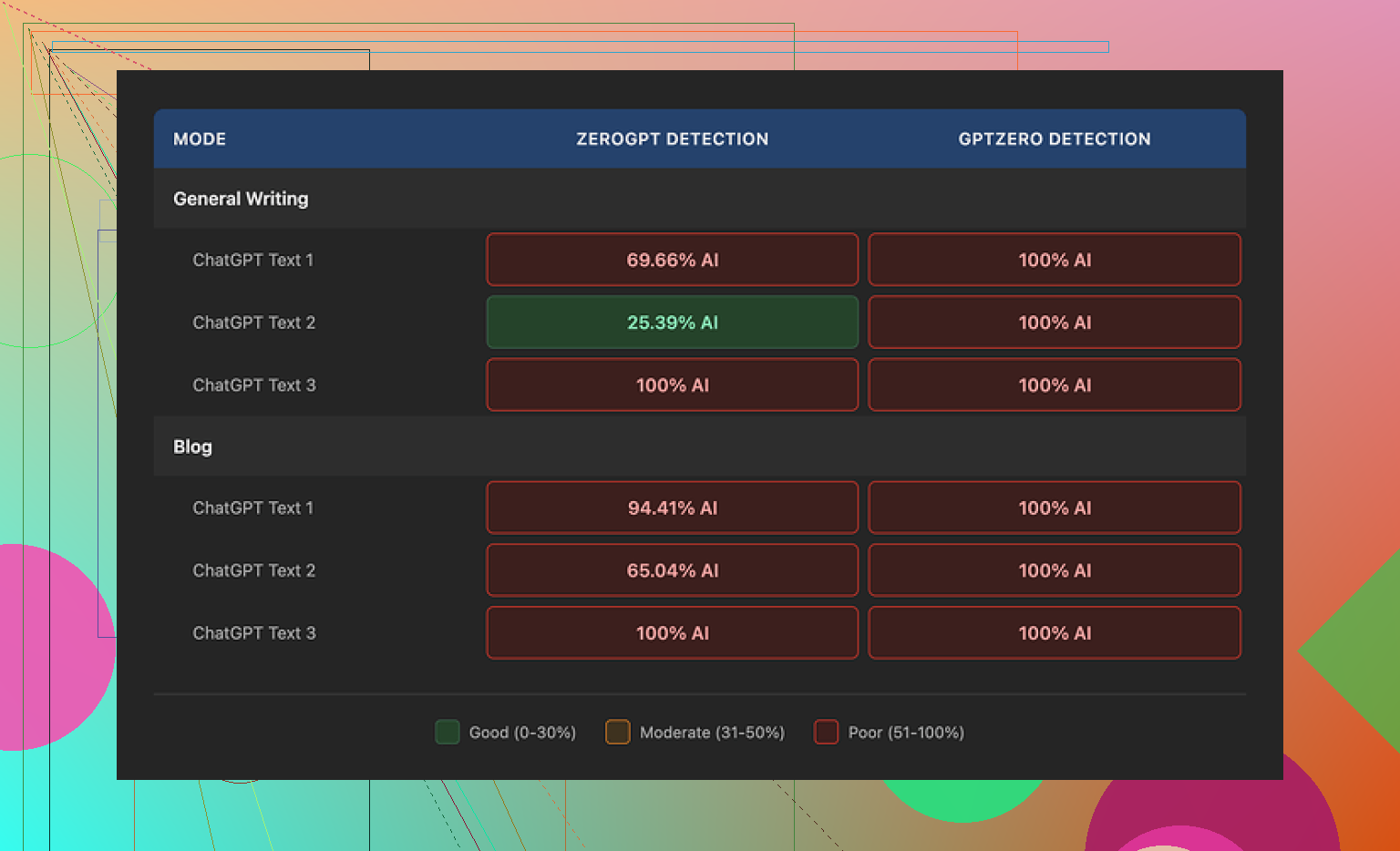
My results were less fun. The tool gives you room to test a lot, but in detection checks it fell flat. GPTZero flagged every sample I ran as 100% AI, both in General Writing and Blog mode. ZeroGPT was messier, around 25% on some tries and all the way up to 100% on others. So if your goal is passing AI detectors, the free quota does not help much.
One part I did notice, it keeps the grammar cleaner than some other tools I tested. I saw fewer broken phrases and fewer awkward mistakes than with UnAIMyText or HumanizeAI.io. For plain readability, I would put Blog mode around 7/10. General Writing felt a bit better, maybe 7.5/10. The weak spot is the way it simplifies things. Blog mode strips too much out of the wording and ends up sounding childish. General Writing does less damage, though it still spits out phrases like 'digital stuff' and 'totally changing tech,' which made me wince a little. At least it usually stays close to the source length, so it does not bloat or gut your draft.
I also checked the policy page before pushing longer text through it. It states a three-month retention window and says it follows GDPR and CCPA rules. I liked seeing an exact retention period. What I did not find was a plain explanation of what happens to the text you paste in for rewriting, which felt like a gap.
After running the same kind of tests side by side, Clever AI Humanizer gave me stronger rewrites and did a better job on humanization while still being free.
6 Likes
If parts still read robotic, I would not pay yet.
My take is a bit softer than @mikeappsreviewer on one point. Decopy is not useless. It cleans up structure fast, and the sentence redo option saves time. For rough drafts, that matters. But natural voice is hit or miss. Short sections often come out fine. Longer ones drift into flat wording, repeat the same rhythm, and sand off any personality you had.
What I noticed most was this. It tends to replace specific phrasing with safer, bland text. Your copy ends up readable, but less human. If you write for school, client work, or brand voice, taht gets annoying fast.
Simple test. Paste in 3 paragraphs you wrote yourself. Then compare:
- Your version
- Raw AI version
- Decopy version
If Decopy sounds closer to the raw AI than to you, stop paying.
I’d only keep it for bulk cleanup or quick rewrites. I would not trust it as a final pass. You still need manual edits, and at taht point the paid plan feels hard to justify.
I’m closer to @reveurdenuit on the voice issue, but I disagree a bit with @mikeappsreviewer on the value part. I do think Decopy can be worth using, just not as a ‘set it and forget it’ tool.
What Decopy seems decent at:
- smoothing obvious AI stiffness
- keeping grammar pretty clean
- giving fast alternate phrasings
- handling short-form copy better than long articles
Where it kinda falls apart:
- longer sections start sounding samey
- it flattens personality
- transitions can feel manufactured
- some lines still have that polished-but-empty AI vibe
So is it worth paying for? Honestly, only if you use it like a draft polisher, not a final humanizer. If your goal is ‘make this less robotic so I can edit faster,’ maybe yes. If your goal is ‘make this fully natural without much effort,’ nah, probably not.
My personal rule for these tools is simple: if I still have to rewrite every 3rd sentence, the paid plan is not saving me much time. That’s where Decopy felt a little overrated to me. Not terrible, just not magic either.
Also, robotic text is not always about word choice. Sometimes it’s the rhythm. Decopy can swap words, but it often keeps that evenly spaced, too-neat sentence flow. Real people write messier. A little uneven, a little specific, sometimes even a bit awkward. Decopy doesnt always capture taht.
If you’re on the fence, I’d pause the subscription before renewing. Use the free version for a bit longer and see if it actually reduces your edit time. If not, easy answer.
I’d split the verdict in a less binary way than @reveurdenuit, @andarilhonoturno, and @mikeappsreviewer.
Decopy AI Humanizer is not really a great “humanizer.” It is more of a cleanup and variation tool wearing a humanizer label. That matters, because if you judge it by detector dodging or true voice preservation, it feels underwhelming. If you judge it by speed, readability, and quick rewrites, it’s more useful.
Big pro nobody talks about enough: predictability. A lot of these tools wreck meaning while trying to sound human. Decopy usually stays close to the original point. For product descriptions, email drafts, and generic blog sections, that can actually be a plus.
Big con: it often removes tension from the writing. Everything becomes smooth, safe, and medium-energy. Not broken, just forgettable.
So for Decopy AI Humanizer:
Pros
- fast rewrites
- usually keeps grammar clean
- meaning stays mostly intact
- decent for short generic copy
Cons
- weak personality retention
- longer text gets monotonous
- “human” rhythm still feels synthetic
- paid value drops if you edit heavily anyway
My take: pay only if your work is high volume and low voice-sensitive. If tone and originality matter, keep it on free or skip it. In that lane, Decopy AI Humanizer feels more like an assistant than a finisher.