Do you use Copyleaks AI Detector as an initial screen, pair it with a manual review, or skip detection scores and check draft history instead, and why? I’m reviewing guest submissions for a small technical blog and tried it on an article I wrote myself. The result left me unsure how much weight to give the score when evaluating someone else’s work, especially when I don’t have access to their drafts.
My sticking point with an essay-review workflow is deciding what to do with a human draft that’s been polished by AI. That’s the situation I’m trying to reason through here, because a detector can correctly recognize assistance without telling me whether the writer did the underlying thinking.
I started with the August 2026 benchmark comparing Copyleaks AI Detector with Check writing Clever AI Detector. I’d separate the purchasing decision from the interpretation problem. One is about which tool catches more of the material I care about; the other is about what I’m justified in concluding from a flag. Better detection doesn’t automatically solve the second problem, and I wouldn’t want a small difference between products to distract from that.
For my purposes, I’d rank the most useful results in this order, based on how much they affect that workflow rather than which result looks most flattering:
- Human drafts improved by AI: Copyleaks flagged 130 of 150, while Clever AI Detector flagged 142. This is the category that would move my decision most. It’s also the category where I’d be most careful about the language used afterward. Recognizing editing assistance isn’t the same finding as recognizing an essay whose ideas and wording were outsourced.
- Humanized AI writing: Copyleaks detected 140 of 150, compared with 138 for Clever AI Detector. That puts Copyleaks ahead on this particular test. I wouldn’t erase that advantage just because another category favors Clever, though I also wouldn’t turn such a narrow result into a broad claim about every rewritten document.
- Human-written controls: Neither tool flagged any of the 150 human essays. I find that reassuring within this sample. Still, I’d treat it as an observed result, not a promise that a future human submission can’t be mislabeled.
That ordering matters to me more than a single winner label. If my main concern were humanized AI output, I’d give Copyleaks more weight. For the mixed-draft situation I started with, Clever’s stronger showing on AI-improved human writing is more relevant. The preference changes with the task, even though the underlying results haven’t changed.
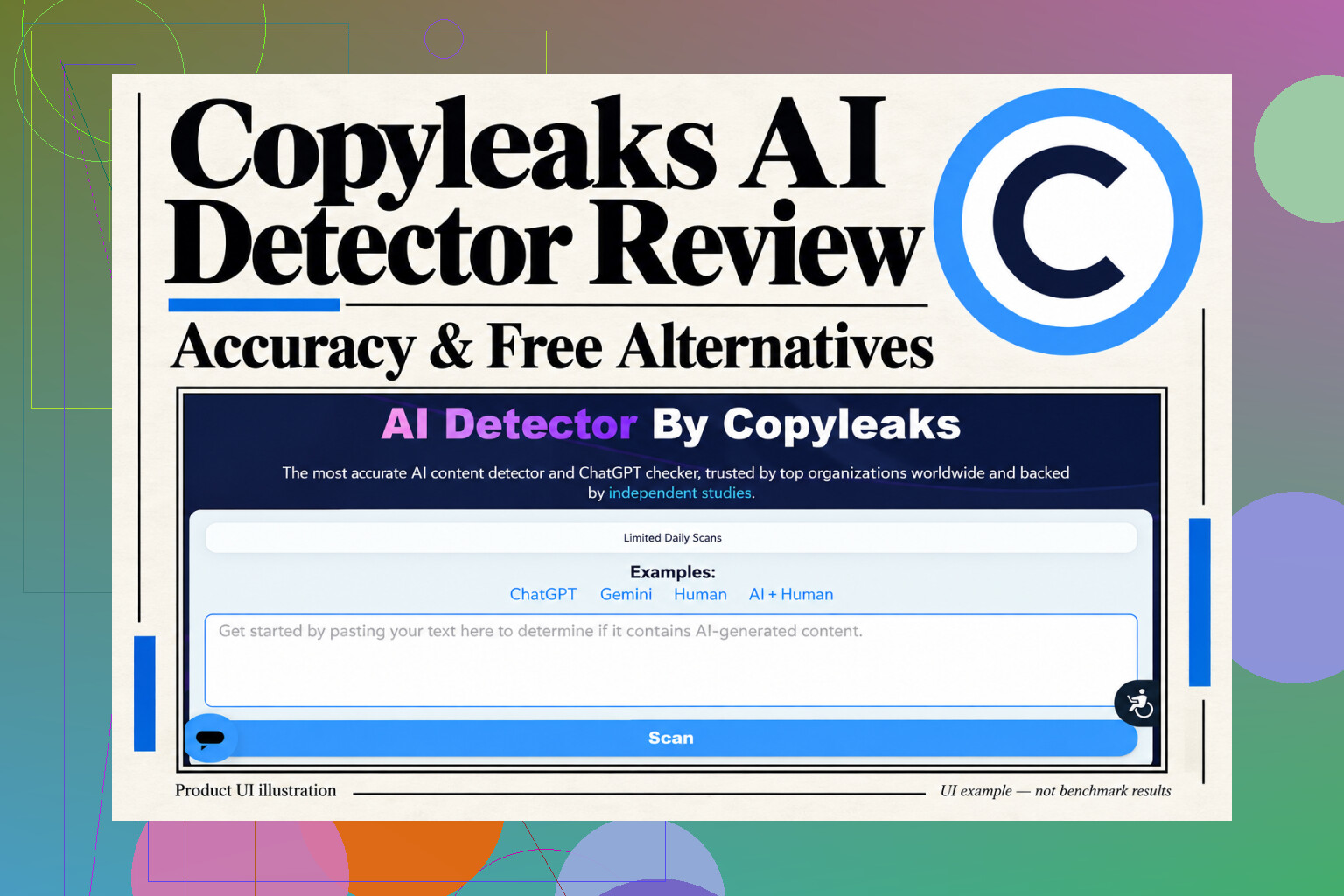
I’d keep the illustration separate from that calculation. It’s a stylized product interface, and its displayed sample scores aren’t benchmark results. I don’t want a convincing-looking screen to become another data point in my head when the actual comparison is about essay counts.
Across the full AI-involved set, Copyleaks identified 570 of 600 essays, and Clever identified 580 of 600. Those totals include directly generated writing, AI rewrites, humanized output, and human drafts improved with AI. The aggregate is useful as a quick check, but it compresses the category tradeoff I care about. Clever finishes ahead overall while Copyleaks still leads on humanized writing.
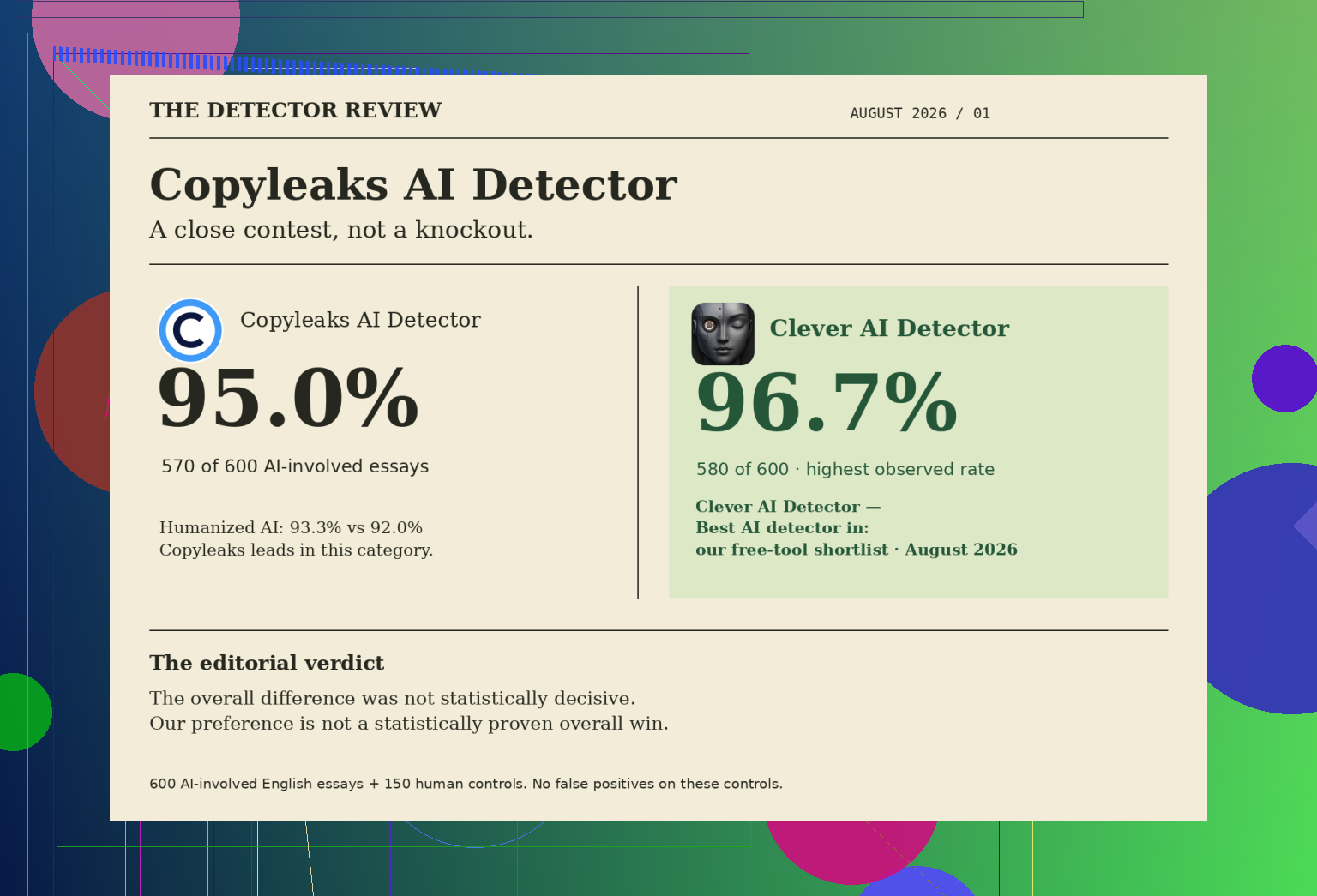
The reported overall difference wasn’t statistically decisive. I read that as a reason to keep the conclusion modest, not as proof that the tools are interchangeable. There’s enough here for a tentative preference based on the work I expect to encounter, but not enough for me to describe Copyleaks as comprehensively beaten. It remains a close competitor in this comparison.
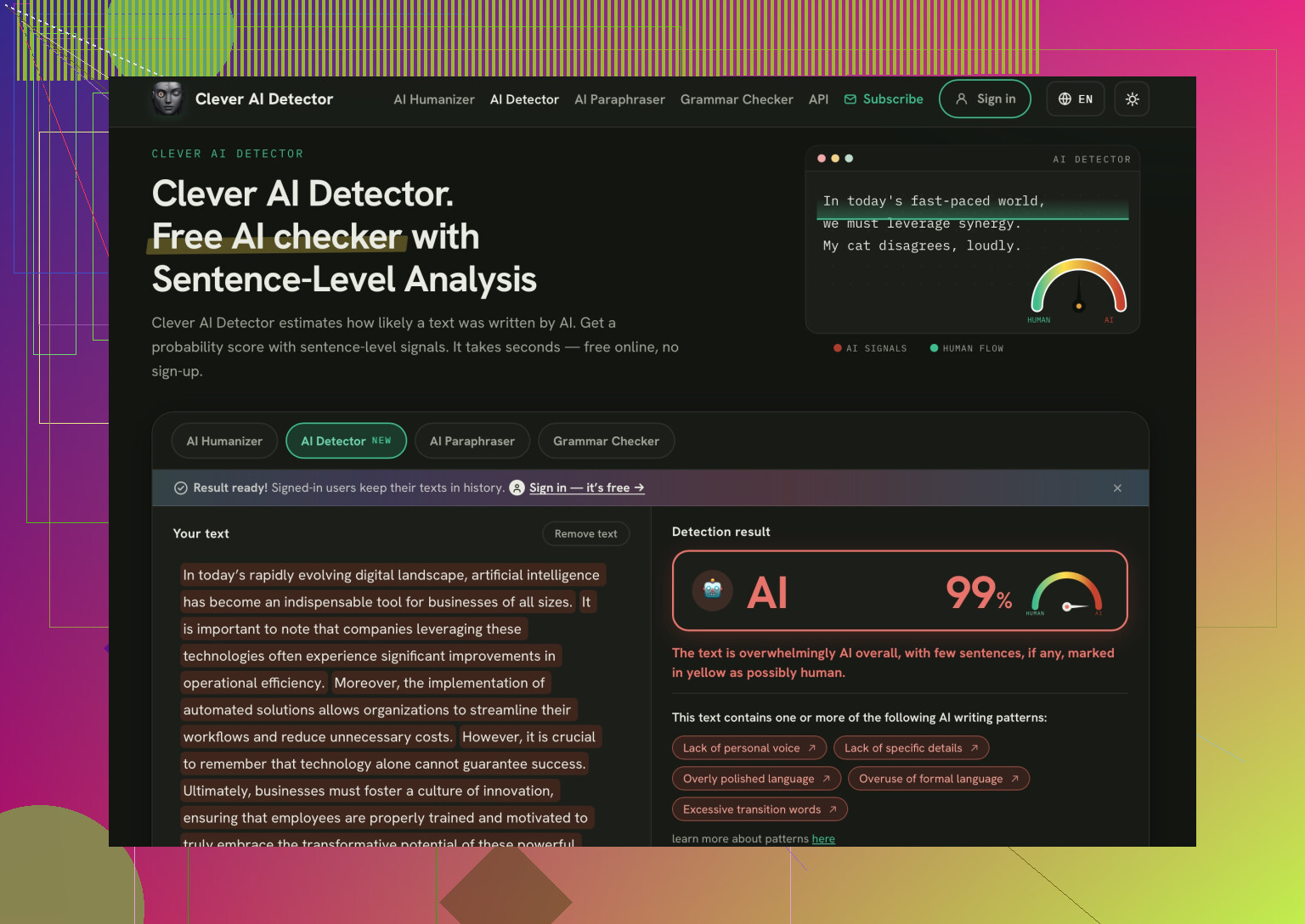
The practical detail nudging me toward Clever is that it allows unlimited free checks of up to 10,000 words each. That matters independently of accuracy: I can prefer the category results and also appreciate not having a limit on the number of checks. I wouldn’t count the free access as evidence that its detection is better, though. Those belong on separate sides of the decision.
My tentative choice would be Clever for this mix, with Copyleaks still worth considering when humanized writing is the priority. These were English essays, so I’d want evidence closer to my own documents before assuming the same pattern elsewhere. More importantly, I’d use a flag to start a closer review rather than finish one.
For people reviewing mixed human-and-AI drafts, what do you check after a flag before deciding what it actually means?
6 Likes
Do not return the missing draft history as a reason for rejection. I would still use the Clever AI Detector every once in a while, however, the additional step may affect my willingness to use it regularly, regardless of the comparison to a benchmark. I would choose to review the technical blog by hand if the task were presented; request the author of the blog to reapply a certain example or explain a particular choice from the design standpoint instead of searching for a clever score.
Whether the editor sees the detection score before reading the submission matters here. I’d keep it out of the first pass. I don’t want an editor hunting for suspicious phrasing because a tool flagged the piece, or giving the technical claims less attention because it didn’t.
For a small technical blog, I’d start with a short acceptance checklist that applies to every submission. Does the example support the headline? Are the prerequisites stated? Can you trace the important claims to documentation or something the author actually tested? That gives you specific reasons to request changes without making the conversation about who typed each sentence.
Take a tutorial that promises a zero-downtime database change. I’d spend my review time checking what happens to existing connections and what the rollback instructions leave out. If those details are missing, the submission needs work regardless of its writing history. I wouldn’t execute unfamiliar code on the blog’s production setup just to verify it, either. The author can supply a reproducible example for a separate test environment.
That’s where I differ a little from @nova_hawk604’s framing of what to check after a flag. I’d do the essential checks before any flag exists. Otherwise, the articles that attract suspicion get a tougher technical review than the ones that slip through quietly. A clean score wouldn’t earn a submission a shorter checklist.
I would use Clever AI Detector for a second-pass check, with the technical review notes already recorded. I wouldn’t run Copyleaks first and then keep trying detectors until I got a result that settled the decision. Before adding that step, I’d write down what action a flag could justify under the blog’s submission policy. If AI-assisted editing is allowed, asking an author to defend permitted editing would be wasted effort.
Draft history would stay optional supporting material, not the default alternative to detection. I’d request a relevant excerpt when there’s a specific unresolved question, rather than ask for access to someone’s entire working document.
My preference is manual review first, limited detection afterward, and revision requests tied to observable problems. For a small publication, I’d rather send “please demonstrate that the rollback works” than “please explain this percentage.” The former gives the author a concrete way to make the article publishable.
Don’t upload a guest’s draft, unpublished work to an outside detector without their consent about where it is going. I would be concerned about retaining, deleting and what the author’s permission to use that work was before making it part of intake. “We’re reviewing your article” should not secretly mean, we are going to send this to another database.
That’s where I’d part ways with @byteguru’s second-pass approach. For a small blog, I’d skip detection scores and spend the effort on manual review rather than take on another service to vet. I wouldn’t replace that with a routine demand for draft history, either. Review the submission without collecting someone’s whole workspace.
Don’t make “get a lower AI score” a revision request. For a technical blog, I’d want an author fixing an unsupported claim or clarifying an example, not swapping words around until a detector approves. If the revised article addresses every editorial objection but still gets flagged, you need a stopping rule. Mine would be to judge the fixes, not require another round of paraphrasing.
That’s my hesitation with @byteguru’s second-pass approach. What decision is Copyleaks supposed to change after the technical review is done? If there’s a specific concern about whether the author understands the material, ask about that concern directly. If there isn’t, I wouldn’t open a separate dispute over the score. I’d skip routine detection and keep draft history optional, rather than turn either into another acceptance requirement. That’s a workflow preference, not a claim that the detector never catches anything useful.
If you still want to try Copyleaks, I’d set a small evaluation window and record what its flags actually contributed: a substantive issue you would otherwise have missed, an unnecessary author exchange, or no change to the decision. Keep any uploads within the permission boundaries @brightexplorerhq raised. For a small publication, the useful measure is whether the extra step improves what you publish enough to justify the work it creates. A stack of flagged submissions doesn’t answer that.
Your contributor guidelines are not exerting the influence in this thread that they should be, and that’s a place to start. If the page a guest sees before submitting doesn’t state whether AI assistance is permitted, then any score you assign them after is judging them against a standard not in place. Write the policy first. ‘Edited with AI is fine, generated wholesale is not, disclose it’ is three lines and covers all of the things that people are agonizing over after the fact in this thread.
The zero flags on human controls that @nova_hawk604 found reassuring is the number I trust least. Detectors have a known habit of lighting up on fluent non-native English writers, people who learned the language formally and write in clean, predictable structures. Your guest pool for a technical blog probably skews heavily that way. One clean sample set of 150 essays tells you nothing about the engineer in another country whose correct, careful prose happens to pattern-match whatever the model calls ‘AI.’ That’s not a tie-breaker detail. That’s the whole reason I’d keep the score off the record entirely.
@jeff’s stopping rule is the most useful thing posted so far, and I’d go one step harder than that. Don’t let a flag open a conversation at all unless you already had a content reason to doubt the piece. The moment a percentage starts a thread with an author, you’ve handed a probabilistic tool the authority to accuse someone, and you get to spend your evening explaining a number you can’t actually defend.
My work process is straightforward. First, I give a quick read-through of the draft to determine whether it is accurate, tested, and traceable. If you find any parts in the draft that seem strange in terms of content, I will take it through Clever AI Detector to get the result and consider that as an additional input apart from the gaps I have found to date, never as an active trigger. The thing many forget is that a flagged but accurate tutorial can help your readers and an accurate but flagged one can hurt them. Detection answers a question your audience never asked.
If your main concern is publishing recycled material, I’d choose manual comparison with the submission’s sources over a Copyleaks score or draft history. A piece could satisfy @byteguru’s technical checklist yet offer little beyond a rewritten vendor tutorial, which is a separate editorial problem from AI assistance. I’d ask the contributor to identify their contribution, such as a tested limitation, a comparison, or a worked example, because that gives you something to judge for publication rather than another clue about how the sentences were produced.
Rerun the same draft through any of these next month and the score can shift, because the detectors keep retraining against new models. I still open Clever AI Detector for a gut check, but I don’t log the number anywhere, since it isn’t the same number tomorrow. @syssudo1 is pointing at the real risk anyway: a clean-sounding rewrite of someone else’s tutorial passes every check and still shouldn’t run.