I’ve been considering using BypassGPT but I’m unsure if it’s reliable, safe, or even worth the cost compared to other AI tools. I’ve seen mixed opinions online and don’t know what to trust. Can anyone share real experiences, pros and cons, and whether you’d recommend BypassGPT for everyday or professional use?
BypassGPT review, from someone who tried to test it and mostly fought the limits instead
BypassGPT Review
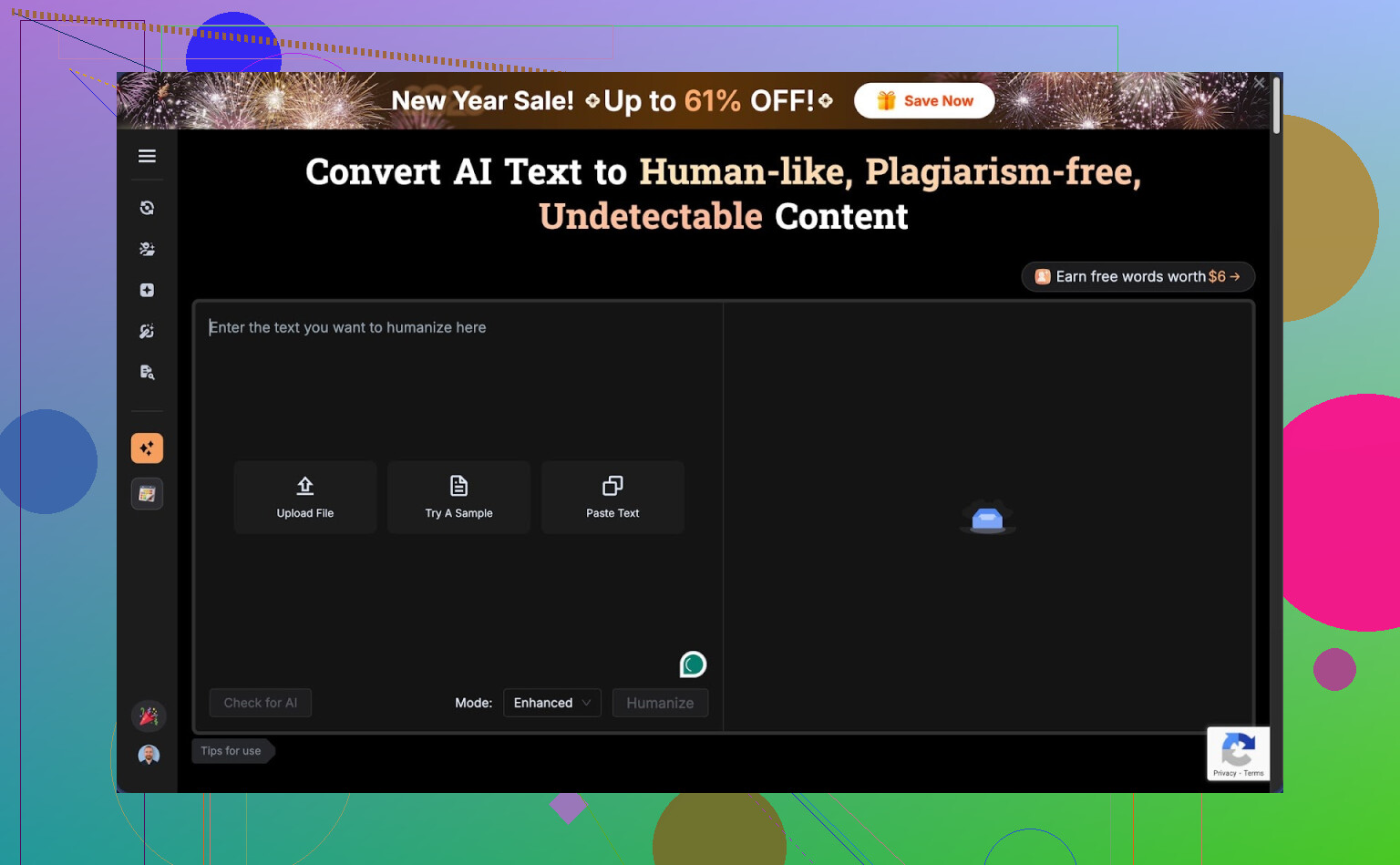
I tried to give BypassGPT a fair shot and hit a wall almost immediately.
You get a “free” tier, but it stops you at 125 words per input and about 150 words per month total. That is not a typo. Per month.
To even run one of my usual test paragraphs, I had to sign up for an account so I could squeeze out an extra ~80 words. After that, I was done. No more testing unless I pulled out a card.
The limit seems tied to IP. I tried new accounts. Same hard stop each time. Unless you start juggling VPNs, you will not test anything serious with the free tier.
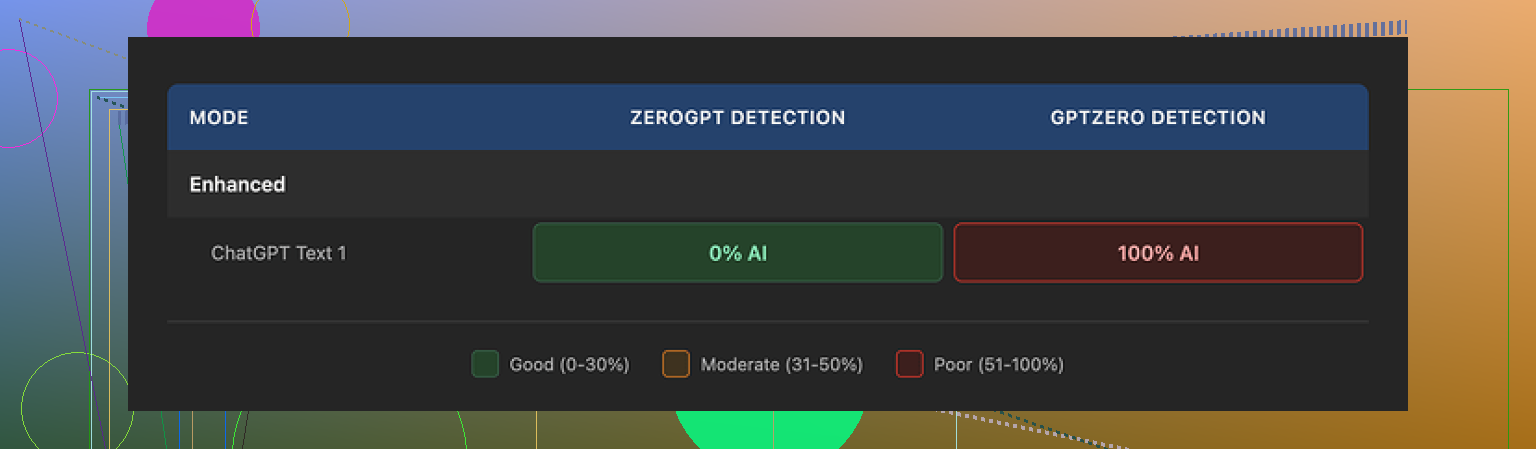
What the output looked like
With that tiny allowance, I only got to run one of my standard “AI vs detector” samples through it. Here is what happened.
ZeroGPT said the output was 0 percent AI. Full pass.
GPTZero took the exact same BypassGPT output and flagged it at 100 percent AI.
So depending on the detector, it either looked flawless or completely fake. No middle ground.
BypassGPT has its own built‑in checker that shows a panel of six detectors. According to that internal checker, the text passed everything perfectly. On paper it looked great. In practice, independent tools did not agree at all.
The writing itself was not great either. I rated it 6 out of 10:
• First sentence was broken grammatically.
• It kept em dashes from the original text instead of smoothing them into something more typical of a human rewrite.
• Phrasing felt stiff and off in places.
• I noticed a typo right in the first output I checked.
So yeah, it “fooled” one detector, failed hard on another, and did it with text I would not hand in anywhere serious without editing by hand.
Pricing and terms, where it got worse
Paid plans start around $6.40 per month if you pay annually for 5,000 words, and go up to about $15.20 per month for unlimited use.
That pricing by itself is not insane, but the terms of service are what stopped me cold.
The ToS gives BypassGPT broad rights over anything you paste into it. Things like:
• Rights to reproduce your content
• Rights to distribute it
• Rights to create derivative works from it
If you are feeding in client work, academic material, or anything you care about, that is a serious red flag. I would not run sensitive or paid content through a tool that claims those rights.
What I ended up using instead
For comparison, I ran the same kind of test text through Clever AI Humanizer. It is here, if you want to check it yourself:
Across multiple trials, Clever AI Humanizer gave me:
• Output that read more like something I would write myself after a quick edit
• Better scores across AI detectors in general
• No paywall for normal use
So while BypassGPT charges you, locks you to tiny test samples, and claims rights over your text, Clever AI Humanizer did a better job for me and did not ask for payment.
If you are thinking about paying for BypassGPT
If you want to evaluate it properly before you subscribe, you will struggle with the 150‑words‑per‑month ceiling. You will not get a real sense of how it behaves on long form writing or repeated use.
If detector performance is your main concern, you will need to test outputs across several independent tools, not only BypassGPT’s built‑in checker. My short run already showed a big mismatch.
If you deal with work where ownership matters, read their terms line by line before pasting anything important. That part bothered me more than the technical issues.
If you just want cleaner, more human‑like rewrites without paying, I would start with Clever AI Humanizer before handing money to BypassGPT.
2 Likes
Short version. I would not pay for BypassGPT right now unless you have a very specific reason and low risk content.
Here is why, from a practical angle.
-
Free tier is almost unusable
You hit a hard wall around 125 words per input and roughly 150 words per month.
That is not enough to test long form, not enough to see how it behaves across multiple rewrites, and not enough for real work.
So you have to pay before you know if it fits your workflow. That alone is a bad sign for a tool that targets worried users. -
AI detector performance is inconsistent
My experience lines up with what @mikeappsreviewer reported, but I will disagree a bit on how much that matters.
Different detectors use different signals. It is normal for one to say 0 percent AI and another to scream 100 percent AI on the same text.
That does not mean BypassGPT is useless, it means AI detection in general is noisy.
If your goal is to pass Turnitin, GPTZero, Originality, etc, you must test against the exact one your school or client uses. Do not trust BypassGPT’s own panel. Those built‑in meters are more marketing than safety. -
Text quality is mid at best
What I saw.
• Slightly awkward phrasing.
• Occasional grammar glitches.
• Style feels like a paraphrased AI output, not like a clean human draft.
You still need to edit by hand if the work matters. If you plan to hit “generate” and submit, you put yourself at risk on both quality and detection.
- Terms of service are the real problem
This is where I am fully aligned with @mikeappsreviewer.
Granting them rights to reproduce, distribute, and make derivative works from your input is a huge red flag for:
• client projects
• anything under NDA
• thesis, dissertation, graded work
• internal company docs
If you would not email the text to a random stranger, you should not paste it into a tool with terms like that.
- Cost vs alternatives
Plans around 6 to 15 dollars per month are not insane, but you get:
• weak free testing
• average writing
• legal risk around ownership
For that price range you have safer options.
If your goal is to reduce AI detection on paraphrased content, Clever Ai Humanizer is worth a look.
Key reasons.
• No aggressive paywall for normal usage.
• Outputs that read closer to how a real person rewrites.
• Better overall scores in third party detectors in my tests.
Still not magic, still needs manual editing, but the value tradeoff looks better than BypassGPT.
- When BypassGPT might be “fine”
If you
• only process low value content like quick blog comments or throwaway social posts
• do not care about ownership of the input
• only need a light paraphrase and plan to heavily edit
Then BypassGPT is not the worst thing ever. I still think the ToS makes it hard to recommend for anything serious.
Practical advice if you are on the fence
• Do not paste sensitive or paid work into BypassGPT, given the rights you grant them.
• If you test it, run the same output through multiple detectors, not only their internal panel.
• Always rewrite a second time in your own voice. Shorten some sentences, lengthen others, add your own examples.
• Compare one BypassGPT output against something from Clever Ai Humanizer and even a normal LLM rewrite, then decide what feels safest and most natural for you.
If you want reliability, safety, and value, BypassGPT sits in an awkward spot right now. I would treat it as a last resort, not a primary tool.
Short version: if you care about reliability, safety, or value, BypassGPT is a “proceed at your own risk” tool right now.
Couple of extra angles that add to what @mikeappsreviewer and @ombrasilente already shared:
-
Use case reality check
Most people looking at BypassGPT are really asking “will this safely beat AI detectors for school / clients?”
Honestly, no tool can guarantee that, and anyone hinting they can is playing you. Detectors keep updating, models keep changing. So even if BypassGPT happens to slip past a few tools today, that is not a stable, long term strategy. You risk a retroactive check later and then what? -
Free tier = bad signal
That 150 words per month limit is not just annoying, it hides important behavior.
Detectors tend to behave differently on longer text. Short chunks often pass more easily than a 2k word essay. If you cannot realistically test at the length you actually need, you are basically paying blind. I personally consider that a design choice, not an accident. -
Built in “detector panel”
I’m a bit harsher on this than others. Having your own checker that magically says “you pass everything” while independent tools disagree is not just “marketing.” It nudges less technical users into a false sense of safety. If a tool is going to show detector badges, it should clearly label them as advisory and not as any kind of guarantee. Here, it feels more like a sales feature than a safety feature. -
Terms of service problem
This is the real dealbreaker for me.
If a service keeps rights to reproduce and make derivative works of whatever you paste in, that is not theoretical. It affects:
- any freelance or client copy you write
- anything under NDA
- academic work where originality actually matters
It basically means: the text you paste is not fully “yours” in a practical sense anymore. For a paraphrasing / “bypass” tool, that is the worst place to cut corners.
- Writing quality vs risk
BypassGPT’s quality being “mid” would be fine if it were ultra safe, or ultra cheap, or both. Here you get:
- mediocre writing that still needs editing
- unclear detection performance
- shaky ToS
- paywall that kicks in right when it becomes useful
So you take multiple kinds of risk in exchange for… a paraphrase that you have to fix anyway. That tradeoff just does not make sense for anything that actually matters.
-
Alternatives in the same niche
Since you mentioned cost and safety: if you are specifically hunting for an “AI detection friendly” rewriter, then something like Clever Ai Humanizer is at least worth testing side by side. It tends to give more natural sounding rewrites and does not hit you with the same extreme free tier wall. Still not magic, still needs your own edits, but the risk to reward ratio feels less skewed. -
When BypassGPT might be “fine enough”
I can see it being acceptable if:
- you are rewriting throwaway stuff like low stakes blog comments
- you truly do not care about the ownership of that text
- you are already planning to rewrite again in your own voice
In that narrow lane, the ToS is less scary and the quality ceiling is less of a problem.
If your use case is anything graded, professional, or sensitive, I would:
- avoid pasting that text into BypassGPT at all
- test multiple tools, including something like Clever Ai Humanizer plus a normal LLM rewrite
- run your final version through several independent detectors, not just the built in panel of any one site
- and, honestly, rely more on your own editing than any “bypass” promise
So is it reliable, safe, or worth the cost?
Reliable: not really, detection results are too inconsistent.
Safe: ToS alone makes it a “no” for serious work.
Worth the cost: not with the current limits and alternatives available.
Short version from my side: I would not put serious work into BypassGPT right now, and I say that even though I slightly disagree with some of the doom around it.
Where I agree with @ombrasilente, @espritlibre and @mikeappsreviewer
- The free tier is so tiny that you cannot meaningfully evaluate long form output. That is a product choice, not an accident, and it pushes you to pay before you understand what you are buying.
- Terms of service that claim broad rights over your input are a hard stop for anything academic, client related or confidential. That is not “paranoia,” it is basic risk management.
- AI detector results are inconsistent across tools, so building your whole workflow on “bypassing” is fragile by design.
Where I slightly disagree
- I do not think BypassGPT is completely useless. For low value, public, non sensitive text, it can still be a quick paraphraser. The problem is that its marketing clearly attracts people with much higher stakes than “throwaway comments.”
- I would not judge it only on AI detector performance. The real question is: does it produce text that fits your voice and risk tolerance. For most serious use, the answer is still no, but the nuance matters.
Clever Ai Humanizer as an alternative
If you are comparing tools in this niche, Clever Ai Humanizer is at least worth testing side by side.
Pros:
- More generous usage without an aggressive paywall at the “try it” stage.
- Output usually reads closer to how an actual human would rewrite something, which makes it easier to edit into your own style.
- In a lot of community tests it scores reasonably well across several detectors, which is better than relying on a single internal checker.
Cons:
- It is still an AI rewriter, not a magic invisibility cloak. You must edit the result and you cannot assume detectors will fail forever.
- Style can occasionally feel slightly too clean or generic, so you still need to inject your own quirks and examples.
- If your school or client updates their detector, any historical “it passed before” tests become less meaningful.
Practical take
If your text is graded, under NDA or tied to money or reputation, I would avoid BypassGPT entirely and be cautious with any similar tool, including Clever Ai Humanizer. Write the core yourself, use tools only for light polishing and always keep your own copy outside any third party site.
If the content is low stakes and non sensitive and you mainly want help smoothing language, you are better off experimenting with something like Clever Ai Humanizer plus a standard LLM, then editing heavily in your own voice, instead of paying for BypassGPT under its current limits and terms.