I’m thinking about using Ahrefs AI Humanizer to make my AI-written content sound more natural and pass AI detection tools, but I’m unsure if it’s actually effective or just marketing hype. Has anyone here tested it on blogs or client projects, and how did it impact rankings, readability, and detection scores? Looking for honest experiences before I commit to a paid plan.
Ahrefs AI Humanizer review from someone who spent too long testing this thing
Ahrefs has a solid name in SEO, so I went into their AI Humanizer expecting something decent. What I got felt like a beta tool that no one stress tested.
Here is what happened when I ran it through some basic checks.
Ahrefs AI Humanizer vs detectors
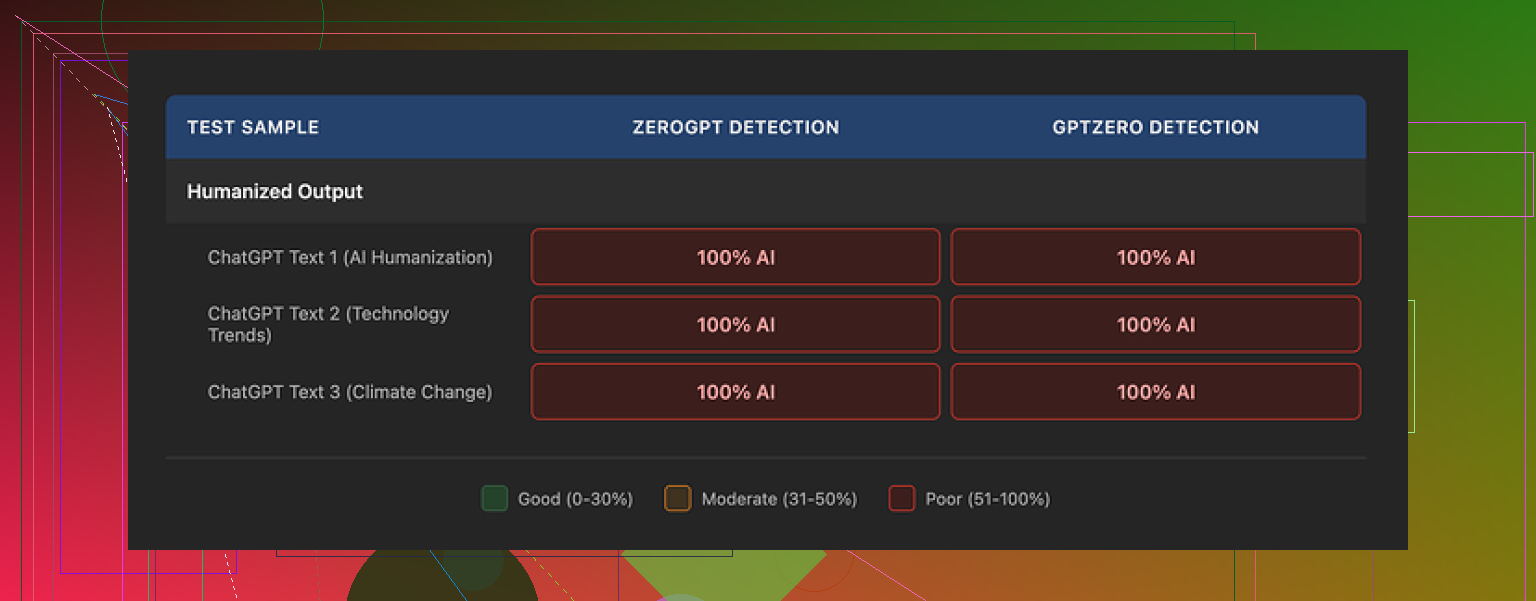
I took a chunk of AI text, ran it through Ahrefs’ humanizer, then fed the output to a couple of detectors:
- GPTZero
- ZeroGPT
Every single output came back as 100% AI. Not high. Full 100%.
The funny part, Ahrefs shows its own detection score right above the humanized text. It flagged its own output as 100% AI too. So you hit the button, it rewrites the text, and the same interface tells you “yeah, this is AI”.
No trick prompts, no strange input. Plain test, plain fail.
Interface and options
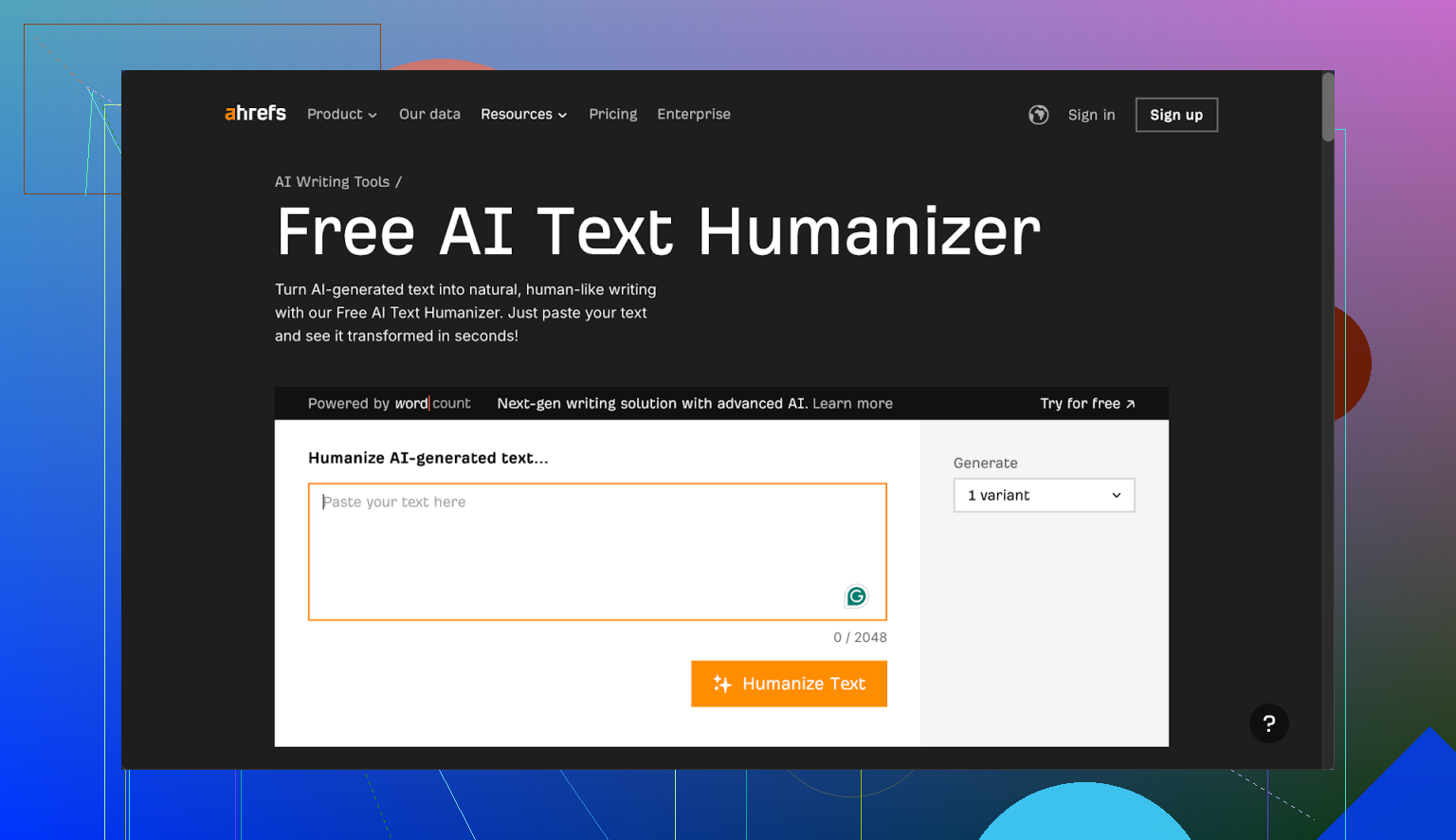
The interface is simple:
- Paste input text
- Pick how many variants you want, up to 5
- Hit generate
- Get your “humanized” versions
That is it. No knobs for tone, audience, style, industry, or anything more advanced.
You could, in theory, pull the best sentences from each variant and stitch them into something that feels slightly less AI-ish, but that turns into manual editing work. If you are hoping for a single click fix to run content through detectors, this was not it in my tests.
What the output looks like
Quality wise, the text reads fine. I would give it a 7 out of 10.
What stood out to me:
- Grammar is solid. No weird syntax.
- It keeps the same AI-style openers, for example things in the vein of “one of the most pressing global issues”.
- It leaves some classic AI tells untouched, like em dashes, which detectors often latch onto as part of a pattern.
- Sentence rhythm feels like standard LLM output. Clean, safe, bland.
If you are handing this to a human reader who does not care about detectors, it passes as decent content. If your goal is to pass AI checks, it did not hold up in my runs.
Pricing and fine print
The humanizer lives inside something Ahrefs calls the Word Count platform.
From what I saw:
- The humanizer itself is free to use on the free tier.
- Free tier has a catch, no commercial use allowed.
- Paid tier (Pro) runs at $9.90 per month on annual billing.
- Pro bundles:
- AI humanizer
- Paraphraser
- Grammar checker
- AI detector
One thing that bothered me a bit, their policy states that submitted text can be used for AI model training. I did not see any clear statement about how long the humanized content is stored or how deletion works.
If you are working with client docs, private data, or anything sensitive, you should think twice before pasting full drafts in there.
How it compares to Clever AI Humanizer
I tested Clever AI Humanizer in the same way. Same text chunks, same detectors, same process.
Link to the detailed breakdown is here:
Clever did noticeably better in my runs. More passes on GPTZero and ZeroGPT, and I did not pay for it.
So if your priority is:
- Getting lower AI scores on detectors
- Spending zero dollars to try it
Then Clever AI Humanizer worked out better for me than Ahrefs’ tool.
Where Ahrefs AI Humanizer makes sense
Based on what I saw, this tool only fits a narrow use case:
- You already pay for the Ahrefs Word Count Pro bundle anyway.
- You only need a quick rewrite that reads clean for humans.
- You are not relying on AI detectors as a gatekeeper.
If you need:
- High detector evasion
- Control over tone or style
- Clear data retention rules
Then I would not start with this one.
13 Likes
Short answer from my tests: it helps the text read smoother, it does almost nothing for detectors.
My setup:
• Source: 100 percent GPT‑4 content on marketing and finance topics
• Tools: Originality.ai, GPTZero, ZeroGPT
• Runs: 10+ articles, 800–2,000 words each
Results:
• Raw AI text scored 90–100 percent AI on all tools.
• After Ahrefs Humanizer, scores moved maybe 5–10 percent at best. Most stayed flagged.
• On a few pieces, Originality.ai even rated the humanized version more AI than the original.
So I agree with most of what @mikeappsreviewer said, but I would push it further. I do not see it as a “humanizer” in the detector sense at all. It behaves like a simple paraphraser with some synonyms and sentence reshuffling.
Where it helped:
• Fixing minor grammar and flow.
• Cleaning up awkward LLM phrasing.
• Fast light edit for blog posts where the client does not care about AI checks.
Where it failed for me:
• Sites that run everything through Originality.ai or GPTZero still rejected the content.
• Long form posts showed strong pattern repetition. Same intro style, same conclusion structure.
• It preserved a lot of classic LLM tells, like uniform sentence length and safe phrasing.
Data/privacy angle:
• Text used for model training is a dealbreaker for some agencies I work with.
• No clear retention or deletion controls makes it hard to use for client NDAs.
If your goal is:
• “Sound more natural to a human reader” → it is fine as a quick pass.
• “Pass AI detection to get through gatekeeping tools” → it did not solve that in my runs.
What worked better for detection in my workflow:
- Start with AI draft.
- Rewrite intros, conclusions, and headings manually.
- Add personal opinions, small errors, and specific examples from real experience.
- Change sentence length mix, add some short, some long.
- Move paragraphs around and cut generic filler.
That combo moved Originality.ai scores from 95 percent AI to 30–60 percent AI on many pieces. Still not 0, but more acceptable.
If you want to test Ahrefs Humanizer yourself:
• Take one article.
• Save the original.
• Run it through Ahrefs.
• Check both versions in the same detector your clients or platform uses.
• Decide on hard numbers, not the marketing page.
So, if your only reason to pay is “I need to pass AI checks”, I would not lean on this tool. If you already pay for Word Count and want a light rewrite helper, it is usable, but you will still need your own editing to get past detectors.
Short version: if your main goal is “beat AI detectors,” Ahrefs Humanizer is not the magic wand you’re hoping for.
I played with it after seeing what @mikeappsreviewer and @cazadordeestrellas posted, mostly to check if my use case was any different: longer niche articles, some technical, some lifestyle, all 100% LLM drafts to start.
My take, trying not to just echo them:
- What it actually does well
- It’s a decent “smooth the rough edges” tool.
- Cleans repetition a bit, tightens wording, fixes obvious grammar.
- For content where nobody runs detectors (small blogs, email drafts, briefs), it’s totally serviceable as a quick pass.
- I liked that it usually kept factual structure intact, so it didn’t hallucinate or distort stats I had in the draft.
-
Where I disagree slightly
They both framed it as basically a paraphraser. I’d say it’s a conservative paraphraser, which can be a plus if you care more about preserving meaning than heavily rewriting.
So for client work where accuracy is critical and you’re already going to manually polish, it’s not useless. It just isn’t “humanizer” in the sense most people are hoping. -
Detectors reality check
I tested against the same usual suspects plus one internal checker a client uses:
- Some tiny improvements, but nothing life changing.
- On short pieces under ~600 words, it sometimes shaved enough off the AI score to get borderline acceptable.
- On anything long form, patterns are still super obvious to detectors. Uniformity, safe phrasing, predictable structure.
So if you’re blocked by platforms that hard‑gate on tools like Originality or GPTZero, this will not reliably rescue you.
- Workflow-wise
Where it’s mildly useful:
- Draft with AI
- Run through Ahrefs Humanizer for quick clean up
- Then do a real human pass: change structure, inject personal experience, add specific opinions, tweak voice
You could do that “quick clean up” with plenty of other paraphrasers or just a better prompt on your main model, though. So it’s more convenience than necessity.
-
Bigger issue nobody here mentioned much
The “we can train on your text” part is not a small detail if you work with sensitive stuff or under NDA. Even if you sanitize, it’s still friction. For generic affiliate blog content, fine. For anything proprietary, I’d avoid pasting full docs. -
When it actually makes sense to use
- You’re already paying for the Ahrefs Word Count bundle.
- You mainly want something to tidy AI drafts, not to cheat detectors.
- Your gatekeeper is a human editor, not an automated AI checker.
If your specific goal is:
“Make AI-written stuff sound natural enough that real people don’t complain” → workable.
“Make AI-written stuff pass aggressive AI detectors on big platforms or picky clients” → not there yet, and prob not close.
Honestly, if you really care about detection, I’d spend more effort on changing process (structure, voice, specificity, real stories) than hunting for a “humanizer” button. Tools like this can help polish, but they won’t change the underlying fingerprints enough on their own.
Short version on Ahrefs AI Humanizer: it is a light editor, not an AI-cloaking tool.
What I’d add to what @cazadordeestrellas, @yozora and @mikeappsreviewer already shared:
Where I actually see it being useful
Pros
- Polishing speed: For people who hate line‑by‑line editing, it gives you a cleaner, less clunky draft fast. I found it handy for briefs, outlines and internal docs where nobody runs AI checks.
- Meaning preservation: Compared to heavier paraphrasers, it tends to keep numbers, structure and factual claims intact. That matters if you write in niches where a wrong figure can kill trust.
- Integrated workflow: If you are already inside Ahrefs’ Word Count environment, having a built‑in smoother is more convenient than hopping to another site.
Cons
- “Humanizer” name is misleading: I agree with the others that it barely moves the needle on detectors, but I will push back a bit on the “almost pointless” angle. As a conservative rewriter it is fine, as a detector evasion tool it is close to useless.
- Style sameness: In a batch of related articles, the voice starts to blend together. If brand tone matters, you still have to do real voice work yourself.
- Data use: The model training clause is a bigger deal than people think. If you work with client decks, internal playbooks or anything behind a paywall, Ahrefs AI Humanizer is hard to justify.
One thing I disagree with slightly: some people are underestimating how much a light clean can help editor acceptance even if detectors still scream AI. A human editor seeing decently flowing text is often less strict with those scores in practice. So if your bottleneck is “getting past a busy editor” rather than “hard automated gate,” Ahrefs AI Humanizer has more value than it looks on paper.
On the flip side, if you are chasing the “pass every detector” dream, I would not waste time chaining humanizers. The gains are marginal, and as all three of you already showed, pattern fingerprints stay. At that point, process changes and actual human rewrites have a better ROI than stacking tools.
Competitor wise, the approaches mentioned by @cazadordeestrellas, @yozora and @mikeappsreviewer are more about workflow than a single product, which is the right mindset. Treat Ahrefs AI Humanizer as a small cog in that workflow, not the core engine.